
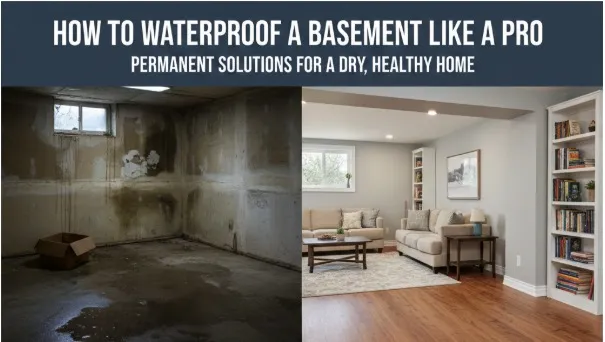
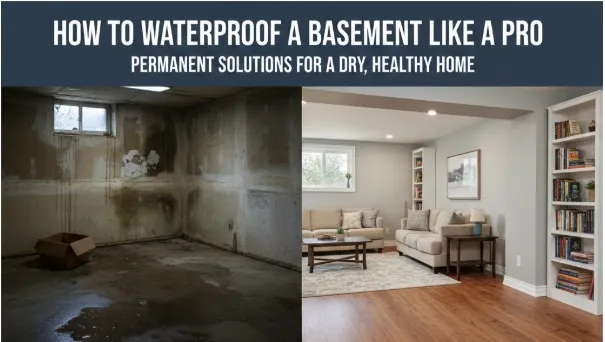
Before and after comparison showing how to waterproof a basement, transforming a damp, damaged basement into a dry, finished living space.
If you’ve ever walked into your basement after heavy rain and smelled damp concrete, or worse, seen water pooling on the floor, you already know basement waterproofing isn’t just a “nice to have.” It’s a necessity. Over the years, I’ve seen homeowners spend money twice (sometimes three times) trying quick fixes that never addressed the real problem. Basement waterproofing works best when you understand why water is entering, not just where it shows up. In this guide, I’ll walk you through how to waterproof a basement like a pro, based on real-world experience, proven construction principles, and what actually holds up over time, not just what sounds good on paper.
How to Waterproof A Basement Like A Pro
Waterproofing basement walls is one of the most common concerns homeowners have, and for good reason. Basement walls are often the first place where moisture shows up, whether as damp patches, white powdery residue, or visible cracks. The key is choosing the right approach based on where the water is coming from and how severe the problem is.
Interior Basement Waterproofing (DIY Approach)
When learning how to waterproof a basement, interior waterproofing focuses on managing moisture after it enters the basement rather than preventing it from entering. While it won’t stop groundwater pressure outside the foundation, it can significantly reduce dampness and minor leaks when done correctly.
Below are practical DIY steps homeowners commonly follow for interior basement walls and floors.
1. Remove Standing Water
Start by removing any pooled or standing water using a wet/dry vacuum or pump. Letting water sit increases the risk of mold growth and concrete deterioration. Once the water is gone, use fans and a dehumidifier to dry the space completely before moving on.
2. Identify the Source of Moisture
Before applying any solution, it’s important to understand the source of the moisture. Condensation, surface seepage, and active leaks require different approaches. Simple tests, like taping aluminum foil to the wall, can help determine whether moisture is coming through the wall or forming from humid air.
3. Clean and Prepare the Surface
Proper surface preparation is critical. Scrape away peeling paint, efflorescence (white mineral deposits), and loose debris. Use a stiff wire brush and appropriate cleaners to ensure the wall and floor surfaces are clean and ready to accept waterproofing materials.
4. Seal Cracks and Holes
Inspect basement walls and floors for cracks, gaps, or holes. Even small openings can allow moisture to enter. Seal these areas using hydraulic cement or concrete repair products designed to expand and bond tightly, creating a durable, water-resistant seal.
5. Seal Windows, Doors, and Pipe Penetrations
Areas where windows, doors, and utility pipes pass through basement walls are common entry points for water. Apply waterproof caulk or expandable foam around these openings to close off potential leaks.
6. Apply Interior Waterproof Coatings
Once all problem areas are sealed and surfaces are dry, apply a waterproof coating to the basement walls and floors. Products such as silicate-based sealers or rubberized waterproofing paints can help reduce moisture penetration. Multiple coats are often necessary for effective coverage.
7. Install Interior Drainage (If Needed)
If moisture problems persist, interior coatings alone may not be enough. Installing an interior perimeter drain system collects and directs water to a sump pump before it spreads across the basement. In some cases, a floor-level French drain may also be required.
Exterior Basement Waterproofing (Preventing Water at the Source)
Exterior waterproofing focuses on keeping water away from the foundation before it can seep into the basement.
1. Improve Ground Grading
Ensure the soil around your home slopes away from the foundation. Proper grading helps direct rainwater away from basement walls, rather than allowing it to pool near the foundation.
2. Install or Upgrade Gutters and Downspouts
Gutters collect roof runoff and channel it away from the house. Downspout extensions should discharge water several feet from the foundation to prevent it from soaking into the surrounding soil.
3. Apply Exterior Waterproof Sealers or Membranes
For more serious moisture issues, waterproof membranes or sealers can be applied to the exterior foundation walls below ground level. These materials create a protective barrier that prevents water from penetrating the foundation.
4. Install Exterior Drain Tiles
Exterior drain tile systems are placed at the base of the foundation to collect groundwater and redirect it away from the home. When properly installed, they significantly reduce hydrostatic pressure around basement walls.
Understanding these options is essential when deciding how to waterproof a basement correctly for your home and soil conditions.
Why Basement Waterproofing Is Necessary
Basement waterproofing isn’t just about stopping visible water. In real homes, moisture problems usually start small and stay hidden long before serious damage appears. By the time water is noticeable, it has often been affecting the foundation, air quality, and finished spaces for years.
Prevents Structural Damage: Concrete is porous, and constant groundwater pressure slowly forces moisture into cracks and joints. Over time, this weakens foundation walls and can lead to costly structural repairs if left untreated.
Protects Indoor Air Quality: Moist basements create the perfect conditions for mold, mildew, and musty odors. Waterproofing helps control humidity, improving air quality throughout the entire home, not just the basement.
Prevents Damage to Finished Areas: Even minor leaks can ruin drywall, flooring, insulation, and stored belongings. Proper waterproofing prevents water from reaching finished walls and hidden spaces.
Increases Home Value and Buyer Confidence: A dry basement signals good maintenance to buyers and inspectors. Homes with moisture issues often face price reductions or delayed sales.
Saves Money Over Time: Temporary fixes may work briefly, but they rarely last. Proper waterproofing reduces repeat repairs and prevents minor issues from becoming expensive problems.
Addressing waterproofing early keeps solutions simpler and more affordable. In practice, the most effective projects are done before major damage, not after it’s already visible.
What Causes Basement Damage?
Basement damage rarely happens overnight. In most homes, it develops slowly as water, pressure, and environmental factors work against the foundation over time. Understanding the causes helps homeowners choose the right waterproofing solution instead of relying on temporary fixes.
Hydrostatic Pressure: When groundwater builds up around the foundation, it creates constant pressure against the basement walls and floors. This pressure forces moisture through tiny cracks and porous concrete, leading to leaks and structural stress.
Poor Drainage and Grading: If the ground around a home slopes toward the foundation, or if downspouts discharge water too close to the house, rainwater collects along the basement walls. Over time, this repeated exposure increases the risk of seepage and foundation deterioration.
Foundation Cracks: Small cracks form naturally as a home settles or experiences temperature changes. Even hairline cracks can allow water to enter, especially during heavy rain or snowmelt.
Clogged or Failing Drainage Systems: Blocked footing drains, damaged French drains, or outdated drainage systems prevent water from being carried away from the foundation. When drainage fails, water pressure quickly builds up around the basement.
Aging or Inadequate Waterproofing: Older homes often rely on outdated waterproofing materials that break down over time. Once these materials fail, the foundation becomes vulnerable to moisture intrusion.
High Water Table or Flood-Prone Conditions: Homes in areas with naturally high groundwater levels are subject to ongoing moisture pressure. Without proper waterproofing and drainage, basements in these locations are more likely to experience chronic water issues.
Types of Basement Waterproofing Methods
There is no one-size-fits-all approach to basement waterproofing. The right method depends on your home’s foundation, soil conditions, and the severity of the water problem. Understanding the difference between exterior and interior methods helps you choose a solution that actually lasts.
Exterior Basement Waterproofing Methods
Exterior waterproofing addresses water before it reaches the foundation, which is why it’s widely considered the most effective long-term solution for serious moisture problems. Common exterior methods include foundation excavation, waterproof membranes, and exterior drainage systems such as French drains.
Pros:
- Stops water at the source before it enters the basement
- Reduces hydrostatic pressure on foundation walls
- Offers long-lasting protection when properly installed
Cons:
- Higher upfront cost
- Requires excavation around the home
- Installation can be disruptive
Interior Basement Waterproofing Methods
Interior waterproofing methods manage water after it enters the basement, directing it safely away instead of trying to block it completely. These systems are often used when exterior work isn’t practical. Common interior methods include drain tile systems, sump pumps with backups, and interior sealants or coatings.
Pros:
- More affordable than exterior waterproofing
- Less invasive installation
- Effective at managing recurring water intrusion
Cons:
- Does not stop water from entering the foundation
- Relies on mechanical systems that require maintenance
- Sealants alone provide only temporary relief
Permanent Basement Waterproofing Solutions
When homeowners ask how to waterproof a basement permanently, the answer almost always involves managing water pressure and drainage rather than relying on surface-level fixes. In real-world conditions, systems that manage pressure, drainage, and durability consistently outperform quick fixes that only treat visible symptoms. Permanent basement waterproofing depends on matching the solution to the specific cause of the water issue.
Foundation Cracks: Exterior crack sealing, combined with proper drainage relief, prevents water from being forced through weakened foundation areas.
Groundwater Seepage: Interior or exterior drain tile systems paired with reliable sump pumps relieve hydrostatic pressure and manage ongoing groundwater intrusion.
Flood-Prone Basements: Exterior drainage systems, high-capacity sump pumps, and battery or water-powered backups ensure protection during heavy storms and power outages.
Older Homes: A combination of exterior waterproof membranes and interior drainage systems provides layered protection for aging foundations that may already have minor movement or deterioration.
Why Permanent Solutions Outperform Quick Fixes
Temporary solutions may reduce moisture temporarily, but they rarely hold up under real pressure. Permanent waterproofing systems are designed to adapt to changing soil conditions, seasonal rainfall, and long-term foundation movement, preventing repeat damage and costly repairs. In practice, homeowners who invest in permanent solutions spend less over time and avoid the frustration of ongoing water problems.
How Much Does It Cost to Waterproof a Basement?
The cost to waterproof a basement can vary widely, and that’s often what confuses homeowners the most. In real projects, pricing depends less on square footage and more on why water is entering, how severe the problem is, and which solution actually fixes it in the long term.
Average Basement Waterproofing Costs by Method
While exact prices vary by region and home type, these ranges reflect typical real-world costs.
- Interior waterproofing systems: Lower upfront costs, and are commonly used to manage recurring leaks. Pricing depends on basement size, drainage layout, and sump pump setup.
- Exterior waterproofing systems: Higher investment due to excavation and materials, but often the most permanent solution for severe water problems.
- Crack repairs and sealants: The least expensive option, best suited for isolated or minor issues rather than ongoing water intrusion.
Interior systems generally cost less initially, while exterior systems cost more but last longer and address the root cause of the problem.
Common Basement Waterproofing Mistakes to Avoid
- Relying on waterproof paint alone
- Ignoring exterior drainage issues
- Sealing cracks without relieving pressure
- Skipping maintenance on sump systems
Frequently Asked Questions
Can I waterproof my basement myself?
You can handle minor moisture issues with DIY steps, such as sealing small cracks or improving drainage. However, recurring leaks or groundwater problems usually require professional intervention to be effective in the long term.
What is the best basement waterproofing method?
The best method depends on the cause of the water problem. Exterior waterproofing is often the most permanent, while interior systems work well for managing ongoing seepage.
What can I use to waterproof my basement floor?
Basement floors can be treated with concrete sealers, crack repair products, or interior drainage systems. For ongoing water issues, managing pressure beneath the slab is more effective than surface coatings alone.
What is the solution for waterproofing a basement?
There isn’t a single solution that works for every home. Effective waterproofing combines proper drainage, durable materials, and installation methods suited to your specific basement conditions.
Does waterproofing a basement actually work?
Yes, when done correctly. Systems that manage water pressure and drainage provide long-term protection, while surface-level fixes tend to offer only temporary results.
How to waterproof a basement properly?
Learning how to waterproof a basement properly starts with identifying the source of water, then choosing the right combination of drainage, sealing, and long-term protection methods.
Conclusion
Basement waterproofing isn’t about quick fixes or one-size-fits-all solutions; it’s about understanding the source of the problem and addressing it effectively. Understanding how to waterproof a basement properly enables homeowners to choose solutions that keep their home dry, healthy, and protected for decades. When the correct methods, materials, and drainage systems are chosen and properly maintained, a basement can remain dry, healthy, and structurally sound for decades. Investing in the right solution early not only protects your home and indoor air quality but also saves money and stress in the long run by preventing repeat damage and repairs.